
The Wild Raw Spirit of Mongolia on Horseback!
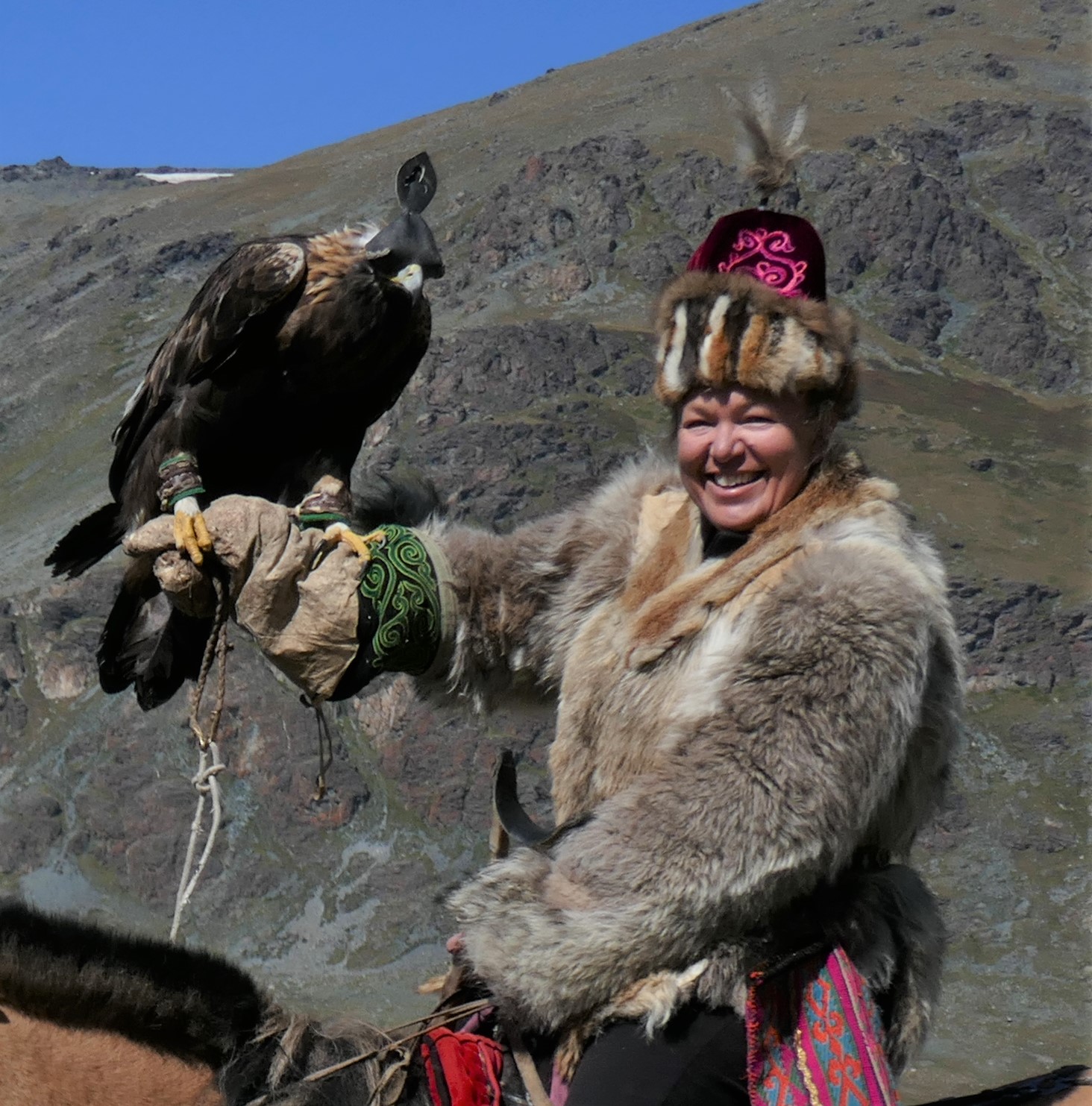
Travelling among the nomadic herders of Mongolia reminded me of how good life is at its most simple!
Having lived a comfortable lifestyle at sea level most of my life and the last 23 years surrounded by tidal mud flats, mangrove creeks and unspoiled beaches of the tropical north of Western Australia, arriving into the most western province of Mongolia was about as far outside my comfort zone as I could have imagined.
It’s an incredible and somewhat shocking experience to arrive in a destination, having not done any prior research! Rewind several months and when friends casually mentioned a ‘horse riding trek’ in a foreign wild country, I enthusiastically signed on the dotted line fully trusting in their choice.
The Landscape – In our Russian-built 4 x4 combi, with Kazakh music blaring all the way, we travelled the dirt tracks that zigzagged the rugged landscape until we arrived at base camp where we met our horses and wranglers.
Instantly the mountains surrounding us had a physical and emotional impact. We were captivated and drawn to the rugged snow-covered peaks that seemed to possess some kind of power that guaranteed an epic adventure ahead. The mountains felt like they enveloped us. It was like a loved one was hugging us. Here, nature’s colour palette, featuring every shade of green imaginable, was memorising! The distant snow made us shiver just gazing at it; quickly we were digging through our luggage for warmer clothing that had been purchased especially for this trip.
 Living in the far north of Australia does not call for a wardrobe of feather down jackets, thermals, beanies and scarves. At around 2000m above sea level we could already feel the effects of a higher altitude, something we had rarely experienced or even considered for this trip. Moving around camp, setting up our tents and gathering our horse tack had us huffing and puffing whilst the local wranglers effortlessly worked harder and faster right next to us getting our horses ready for our first ride.
Mongolian Horses – We discovered quickly that the revered Mongolia horses are very different to those we had ridden back home. Being pony-sized and pony-shaped we had assumed our time in the saddle would provide us with effortless movement and freedom in the beautiful wide open valleys and mountain region of the Altai National Park. To our surprise our sturdy little mates were feisty and unbelievably tough little ponies. They appeared quiet but scratch the surface and we discovered their unpredictable wild side.
What we didn’t know was when these horses were not on the trail they roam freely among their herd grazing on natural pastures and having to fend for themselves against wolves and extreme weather. We started to get the feeling that developing a healthy respect for our horse and staying in the saddle was going to be the biggest challenges of the trek.
On meeting our horses for the first time we were instantly deciding on names for our new friends. Mongols do not name their horses rather they identify them by colour, markings or branding. From our Western perspective we were shocked the horses were not named. Horses in our world are regarded as a luxury item but for Mongols horses are a practical necessity. They provide transport, food and milk. Our desire to name and hug our new friends did not go down terribly well.
At first, I had my eye on a beautiful grey that had a soft and friendly face. I was secretly hoping we would be put together but my match turned out to be a feisty little red head. With his ears pinned back right from the start I had a feeling he didn’t like me. I named him Buddy in the hope I could talk him around and that we would bond, after all I had a love of horses and did not fear riding. I trusted my Buddy would sense this.
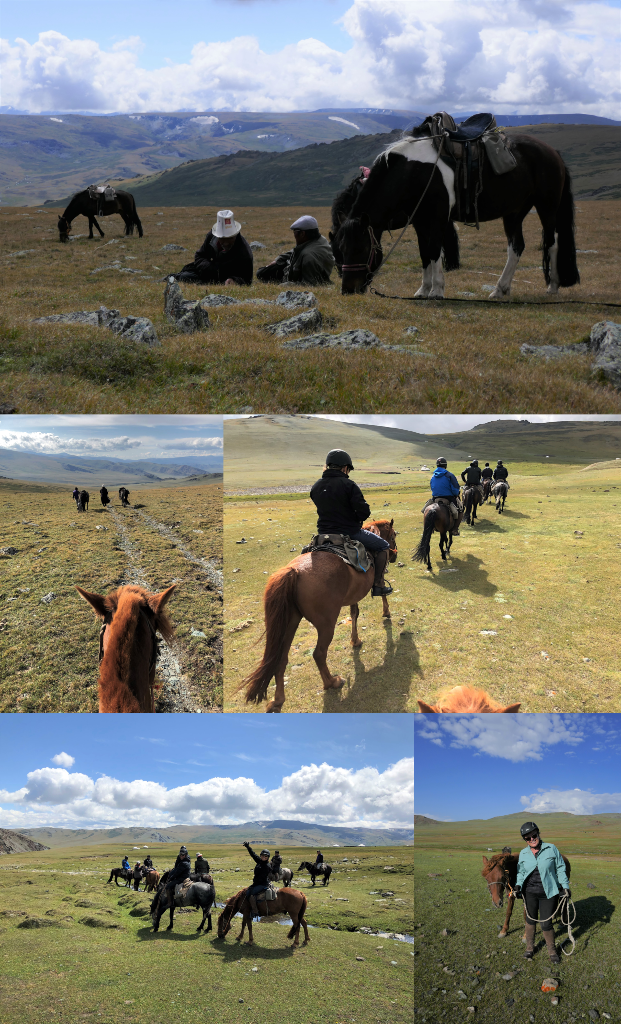 Unfortunately after a rough few days in and out of the saddle and with lots of negotiation on where in the pack Buddy was happiest Buddy decided to show me who was boss. There was no controlling his wild spirit; he had a mind of his own! On day three Buddy decided he’d had enough of me and bolted sharply to the right completely unexpectedly and I ended up hitting the ground heavily. Nursing a concussion and back injury my riding days in Mongolia had finished rather abruptly. Buddy looked pretty pleased with himself. We changed his name to Scrappy for the rest of the trek. I spotted him many times after my fall running free as a pack horse with his herd and ears beautifully facing forward and looking happy again…sh*t horse!
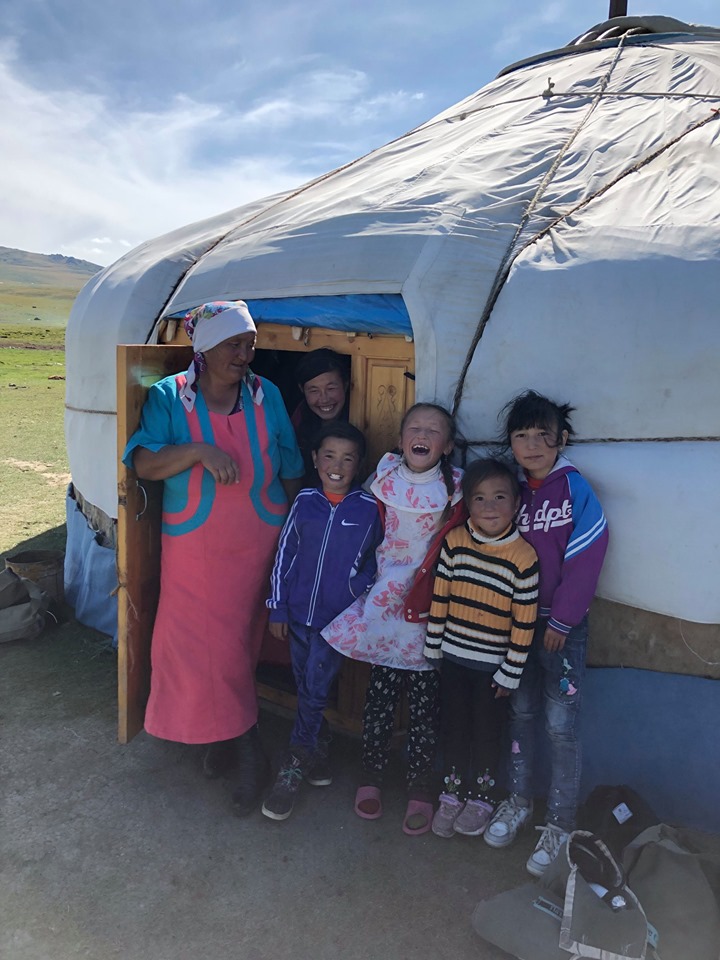
Nomadic Lifestyle – Whilst the horses were an exhilarating and spirited mode of transport across the Altai Mountain region, since arriving in Mongolia my main interest was with the people and their nomadic way of life. Having arrived near summer’s end, the families we came across were still living in their gers (yurts) alongside a free flowing river in the cooler highlands. Families typically move a couple of times a year, according to the needs of their livestock and pasture conditions and with winter approaching their next move to their winter house in the lower valleys was imminent.
Nursing my injury and not surprisingly banned from getting back on a horse I was lucky enough to experience family life with many of these herders, it was as if I was part of their close knit family.Living in a ger is much like going camping for a short holiday in Australia; no bathroom facilities, no privacy from family members, the floors and walls simply lined in animal felt and right in middle of the room sits a wood fire that provides warmth and a place to cook. The women spend many hours a day preparing meals hunched over this small space.
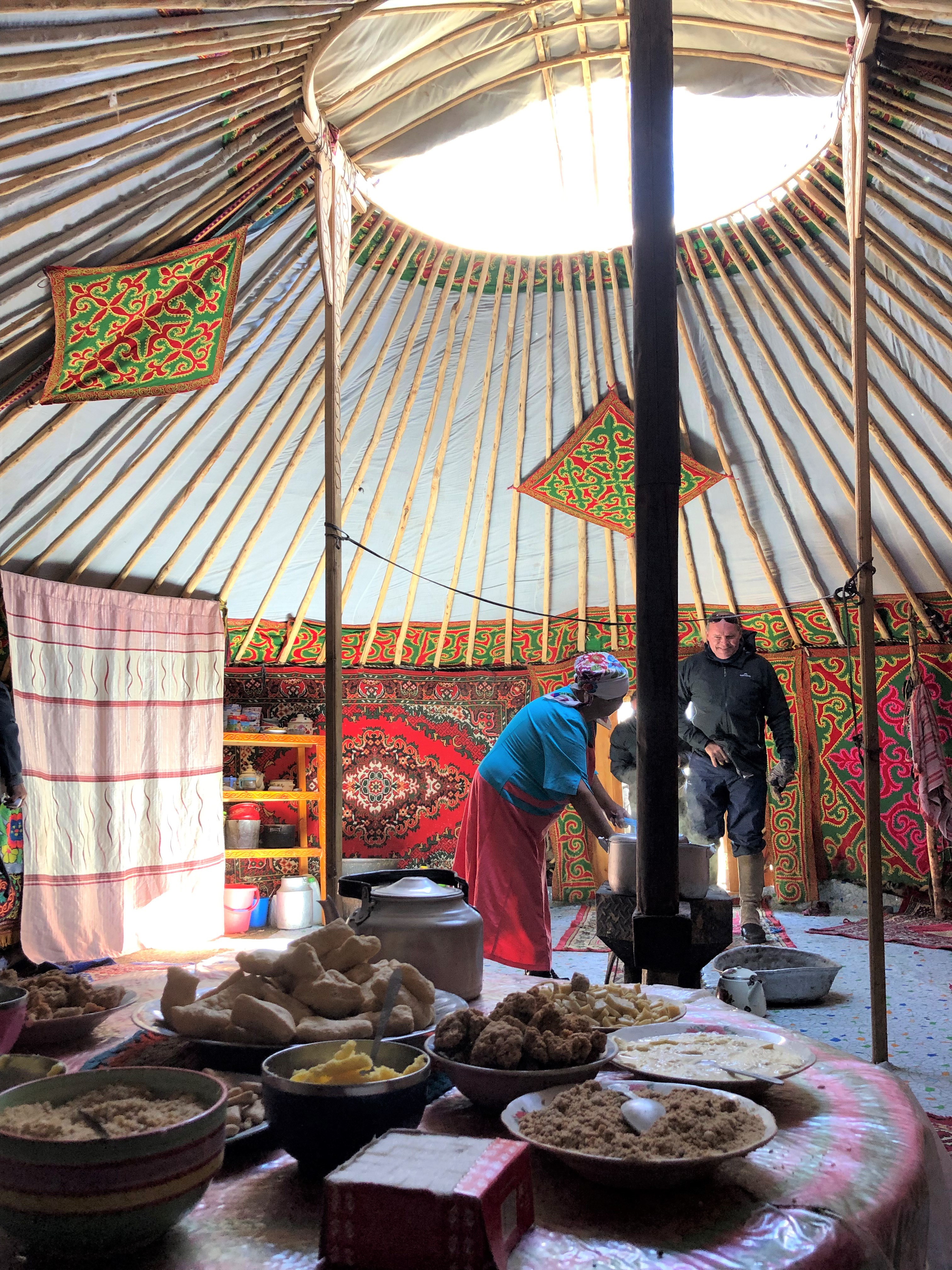 Fortunately there was some solar power electricity that provided the only level of luxury for these families. Keeping food fresh was a priority along with charging mobile phones and surprisingly we spotted the occasional box television set that really looked out of place!
Apart from the obvious lack of personal space and the basic living conditions, what takes your breath away when you step inside a ger is the genuine warm welcome you receive from the host family and the plentiful offerings of food and tea laid out just for you. The arrangement of dried milk curds, fermented cheeses, mutton dumplings and fat fried bread products did not look or smell that appealing however the intention was so genuine that you had no choice but to sit down and enjoy the feast. Salty milk tea is always brewing on the stove and locals drink it in large quantities. What I discovered pretty quickly is that it tastes awful and if you manage to get through your bowl it is quickly topped up. I only made that mistake once! The ritual of sitting down together and feasting on local cuisine, sharing smiles and laughs, often with very little common language, is a very humbling experience.
The other stand out feature inside the gers was the brightly coloured tapestries that wrap around the felt walls. It was explained to us that many of these were handmade and passed down from previous generations. Traditional clothing such as hats and coats were also proudly displayed around the gers, these items mostly handmade, often from animal fur, and some beautifully embroidered. The chief wrangler on our tour wore his hat and coat with so much pride, no doubt keeping him warm but also importantly in touch with his past.
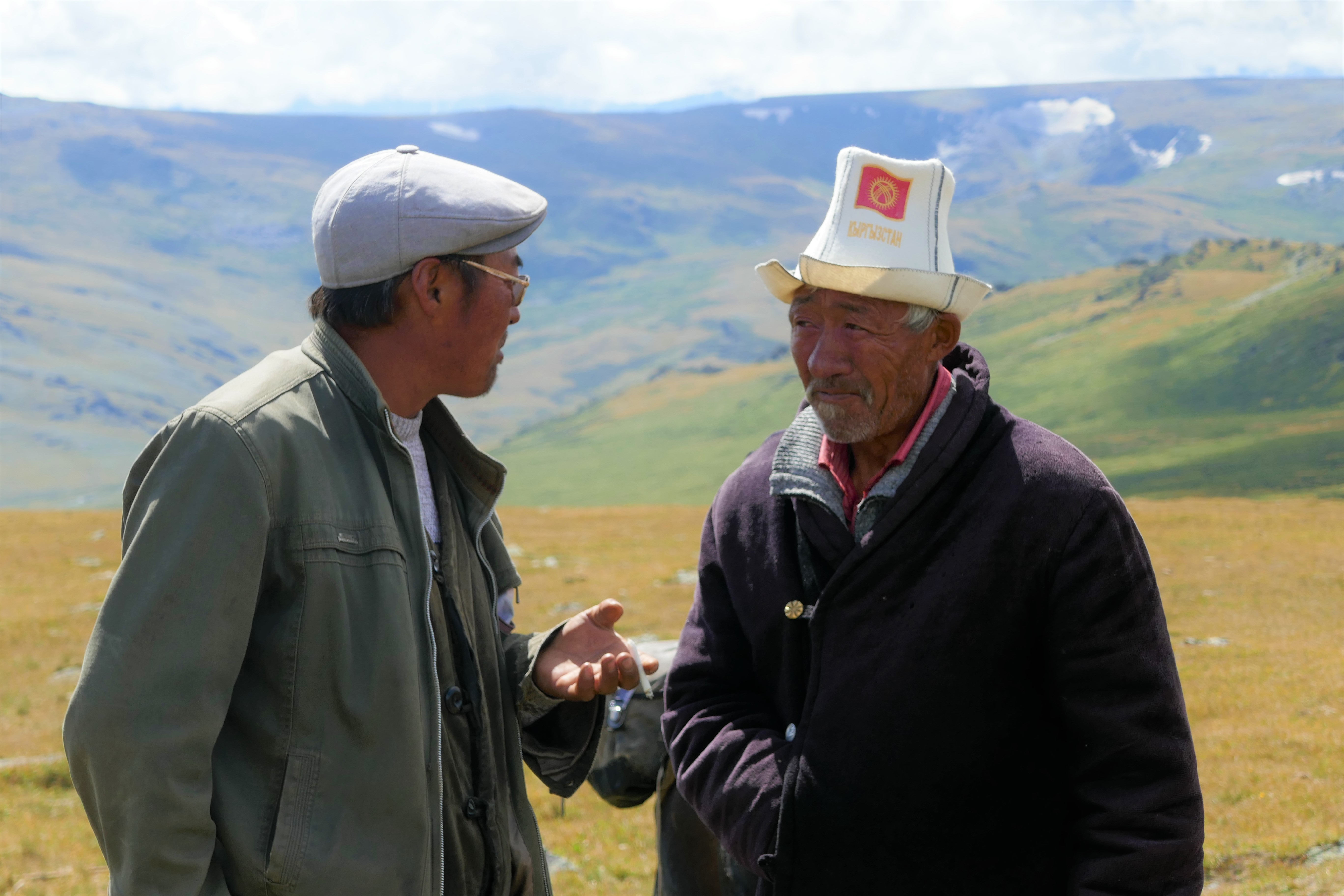 The children were shy but curious of us and there were 4-5 children in most families we visited. They played mostly outside and were involved in the day-to-day chores of family life. I’ll never forgot the day we arrived at our wrangler’s ger and his children were wandering around outside with the head of a sheep that had been recently slaughtered and butchered. I’m standing there slightly mortified by the sight, they laughed at my reaction and then moved on to the pile of intestines laying on the ground nearby and threw them high into the sky for the eagles to swoop down and catch. Child’s play is so different in Mongolia!
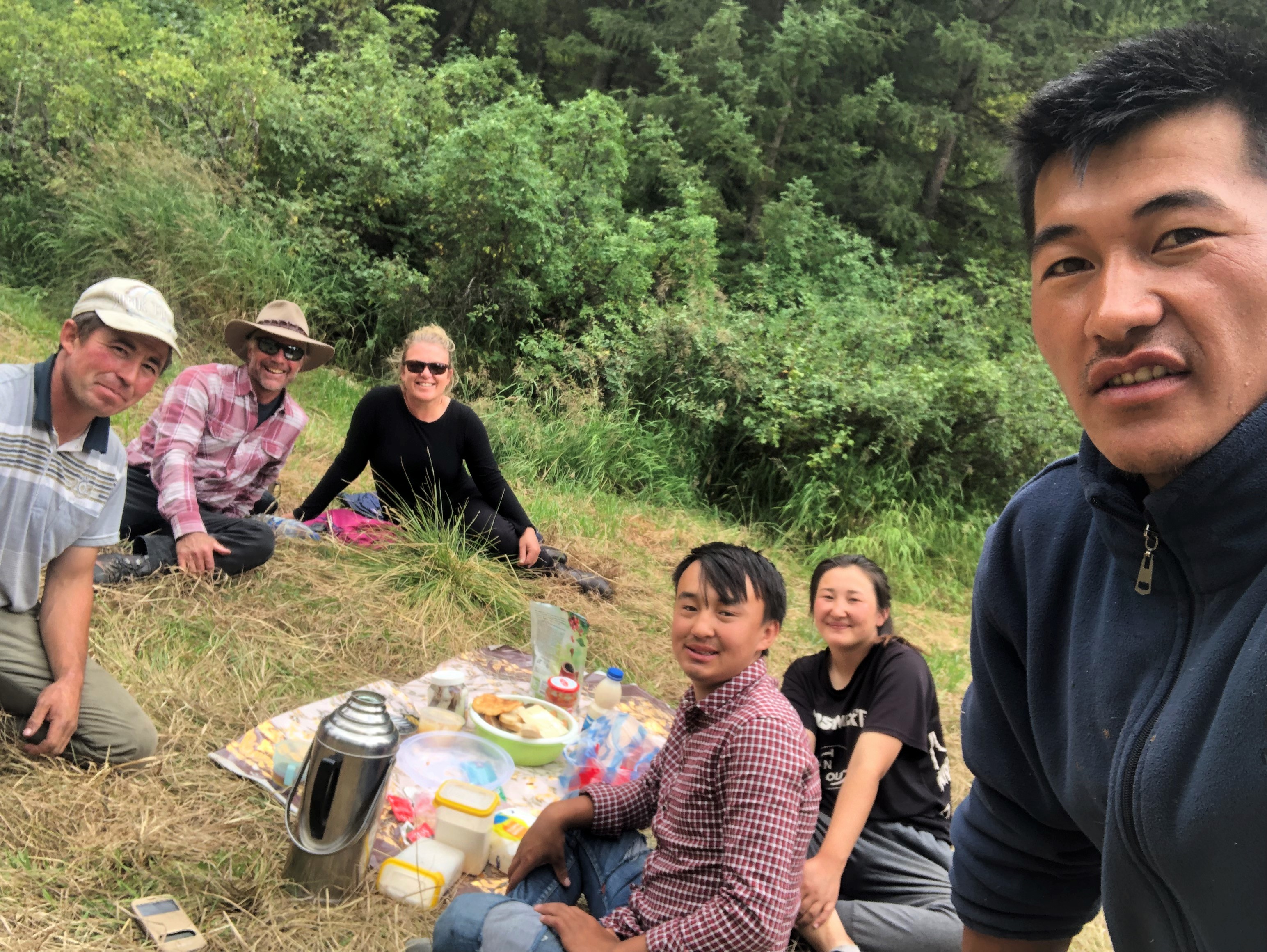
 Camp Life – The group of young wranglers, cooks, interpreters and guides we had travelling with us had a knack of not only catering for our every need but they were also very genuine in bonding with us and learning about our life in Australia. It was so heart-warming to witness their playful, relaxed and happy approach to their work but I wondered on many occasions if they would ever cope with the intense work ethic in Australia.
I ended up spending a lot of time with these young people, travelling between campsites in our 4 x 4 combi and listening to their laughter and Kazakh music along the way. The daily chores of setting up camp, collecting animal dung for the fire, preparing and cooking meals and tending to the horses took most of our time but along the way there was always time for some fun. Wrestling was clearly a favourite sport in Mongolia, the men would often randomly break into a playful wrestle, whilst it looked fun there were obvious rules, elements of pride and tradition involved.
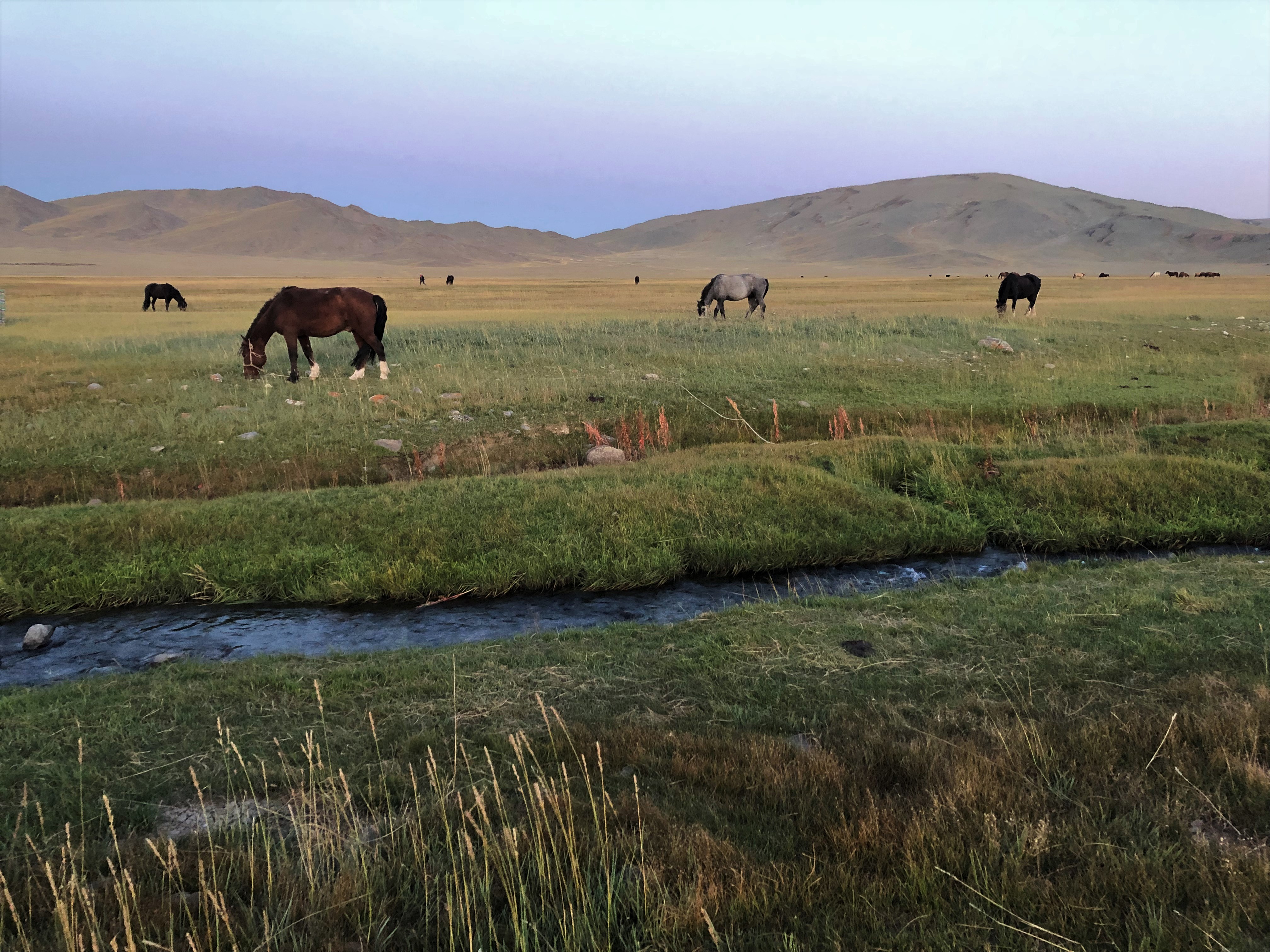
 Sleeping in the wilderness tucked up in our little tent on a blow up mattress and waking up to a soft sprinkle of snow on the ground surrounding us was surprisingly blissful (providing you had a good strong bladder and didn’t have to do a midnight run to the pit toilet!). Each morning we would peak out of our little tent to see if smoke was wafting from base camp – this was the signal that coffee was on and it was time to start the day. There is no better start to a cold frosty morning than wrapping your hands around a steaming hot coffee and quietly listening to the chorus of bird life and watching the horses graze contently around camp in the most beautiful morning light.
 The food was an experience that you had to fully embrace, mostly out of respect but also out of cultural curiosity. The Mongol diet predominantly consists of animal products: yak, goat, camel, sheep, horse. We tried it all but mutton was the most commonly prepared meat and I can honestly say (as a lamb lover) I may never eat it again. The smell and taste of boiled mutton without seasoning is almost inedible, thankfully we smuggled in some chilli sauce and got through it without heaving. What we did learn was that when you are hungry and there is no alternative you just get on with it. Much like the day our crew butchered Lucy, the sheep that had travelled with us for three days on the roof rack of the combi. Each night she was carried down so she could graze around our camp, we lovingly named her and we were really starting to enjoy her company. Whilst we kind of knew what she was there for it was rather devastating the morning she was led away and slaughtered so we had food for the rest of the week!
 Our time in Mongolia ended up being very different to what we thought it would be and we returned home feeling incredibly blessed for the experience and forever grateful for being looked after so well. Not unlike most of our previous travel experiences we now want to see more of this beautiful part of the world as our eyes and imagination are now much more open to the opportunities that are waiting for us.
The lasting impression I took home with me is of the people; their generosity towards us, the obvious sense of community that was evident in surviving the harsh landscape and climate and their well-being, which for me was reflected in the smiles of their faces. My initial intention to bond with my horse and take in the landscape of a wild and untouched wilderness from a saddle turned out to be a more long lasting bond with the beautiful people of Mongolia who have inspired me to simplify my life, aim to be less busy and embrace happiness.
My Tips for Mongolia
- Horse Riding – not for beginners however if you are experienced in the saddle Zavkhan Trekking are the people to book with.
- Domestic Travel -Internal Travel (flights, buses etc) – be prepared for schedule changes, not a reliable public transport system.
- Lifestyle – The less time you spend in the cities the better – Head to the majestic Altai Mountains and experience the Nodamic way of life.
- Accommodation – Make sure you sleep in a Ger somewhere along the way.
- Time – Be prepared for a constant slow pace to life where time is leisurely considered.
- Food – The culture is predominately animal products that are not rich in flavour, be prepared for this and take your own seasonings.
- Reading material – On The Trail of Genghis Khan, Tim Cope.
- Self Driving – take a trusted guide, there are very few road signs and the roads (many unmade) are bumpy and the journeys long, it would be very easy to get lost.
- Shopping – grab yourself a beautiful piece of Mongolian cashmere clothing.
- Massage – be warned the women of Mongolia have very strong hands, do not ask for a firm massage.
.
 Tenderfoot Travel
Leave a comment